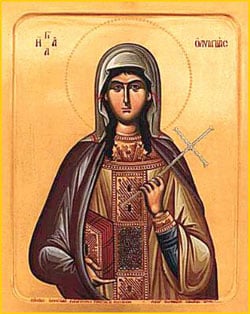
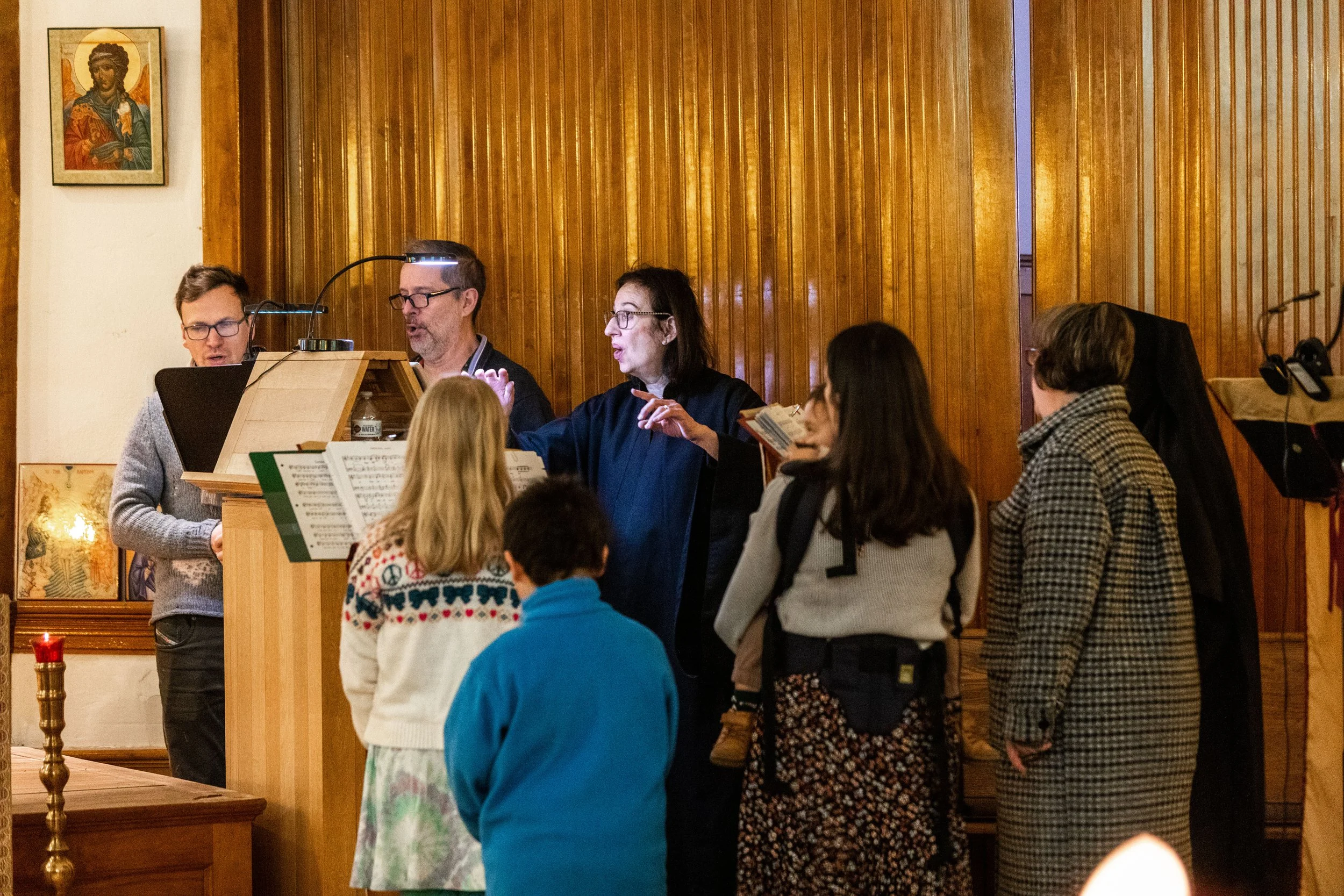
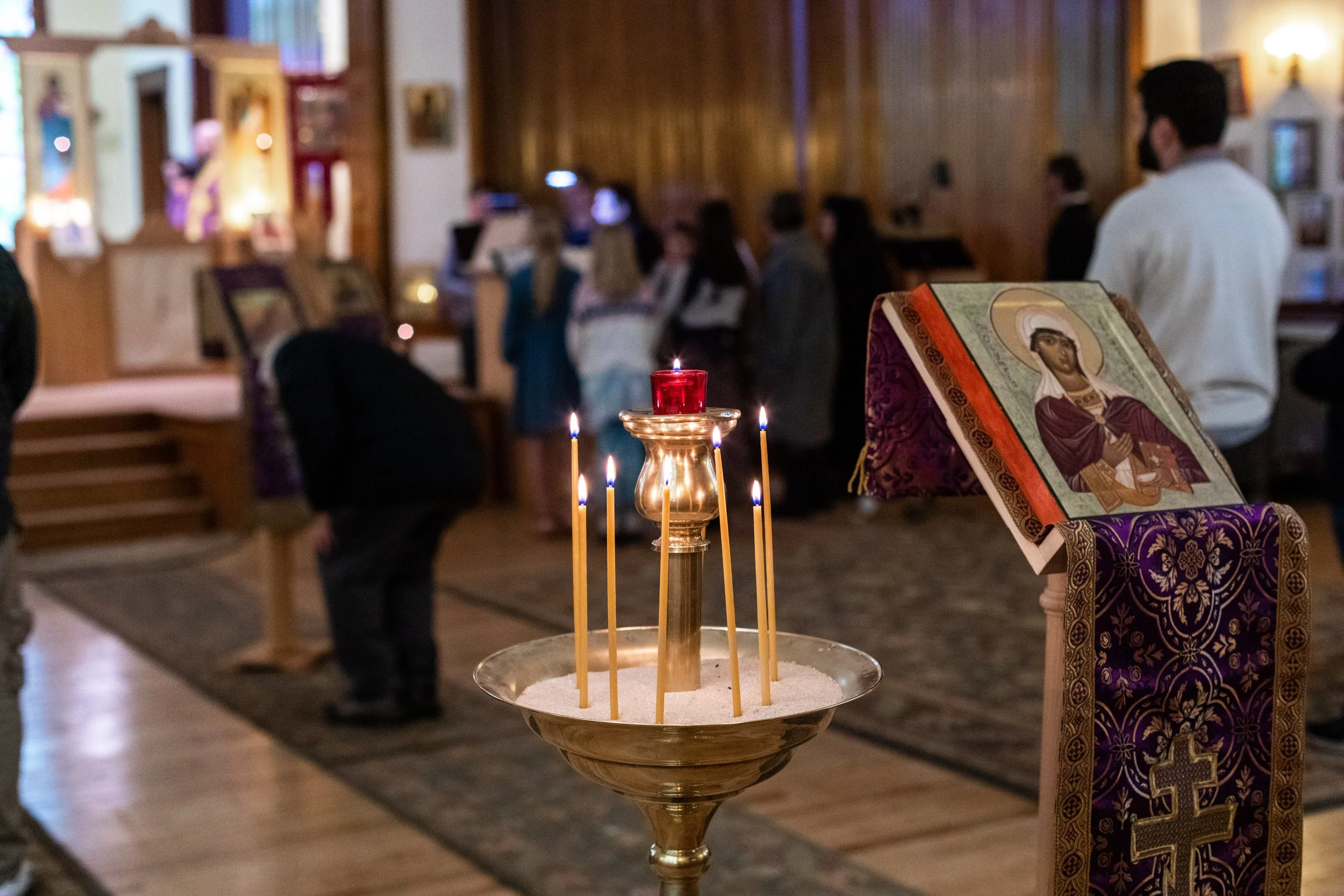
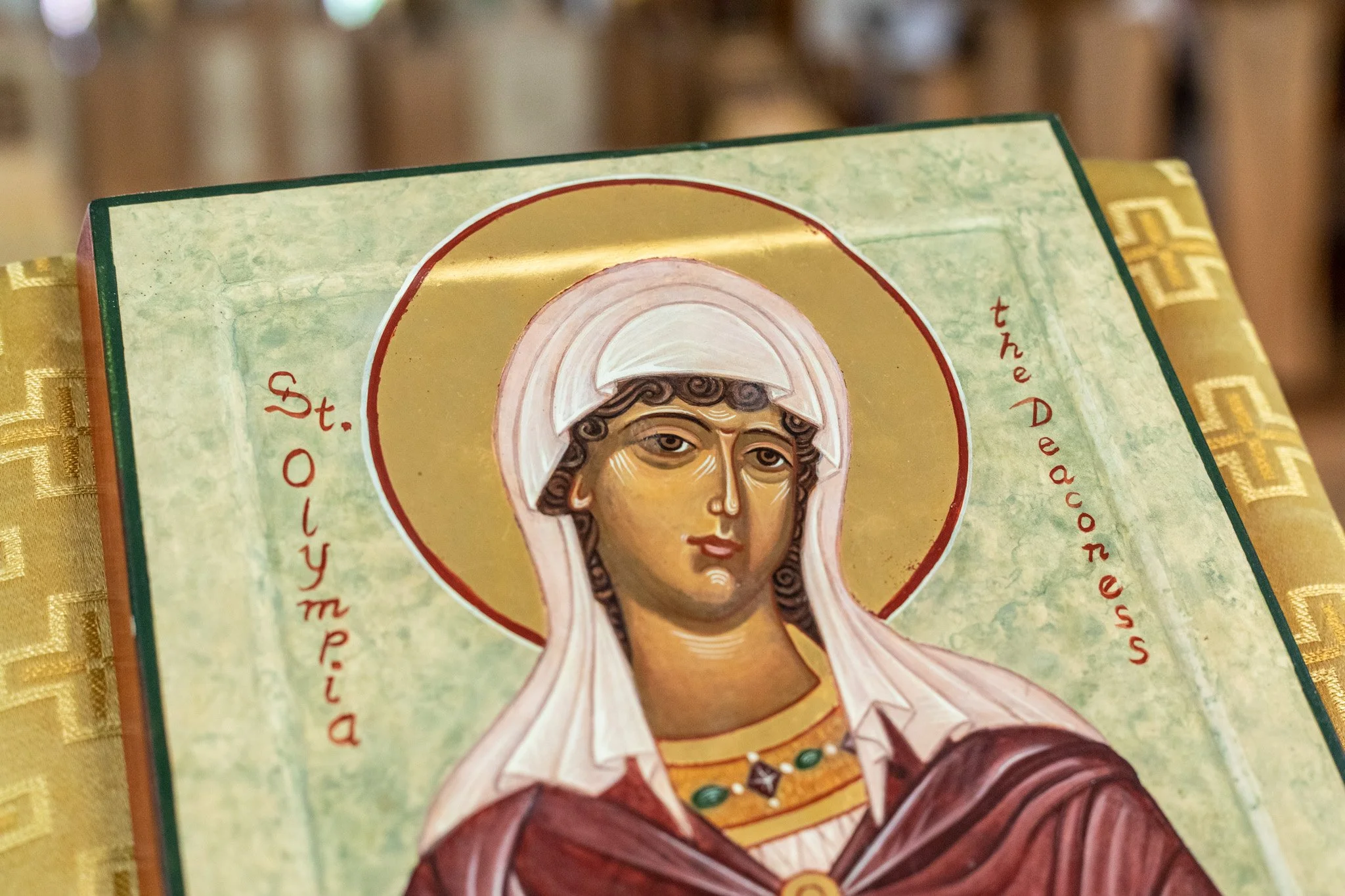
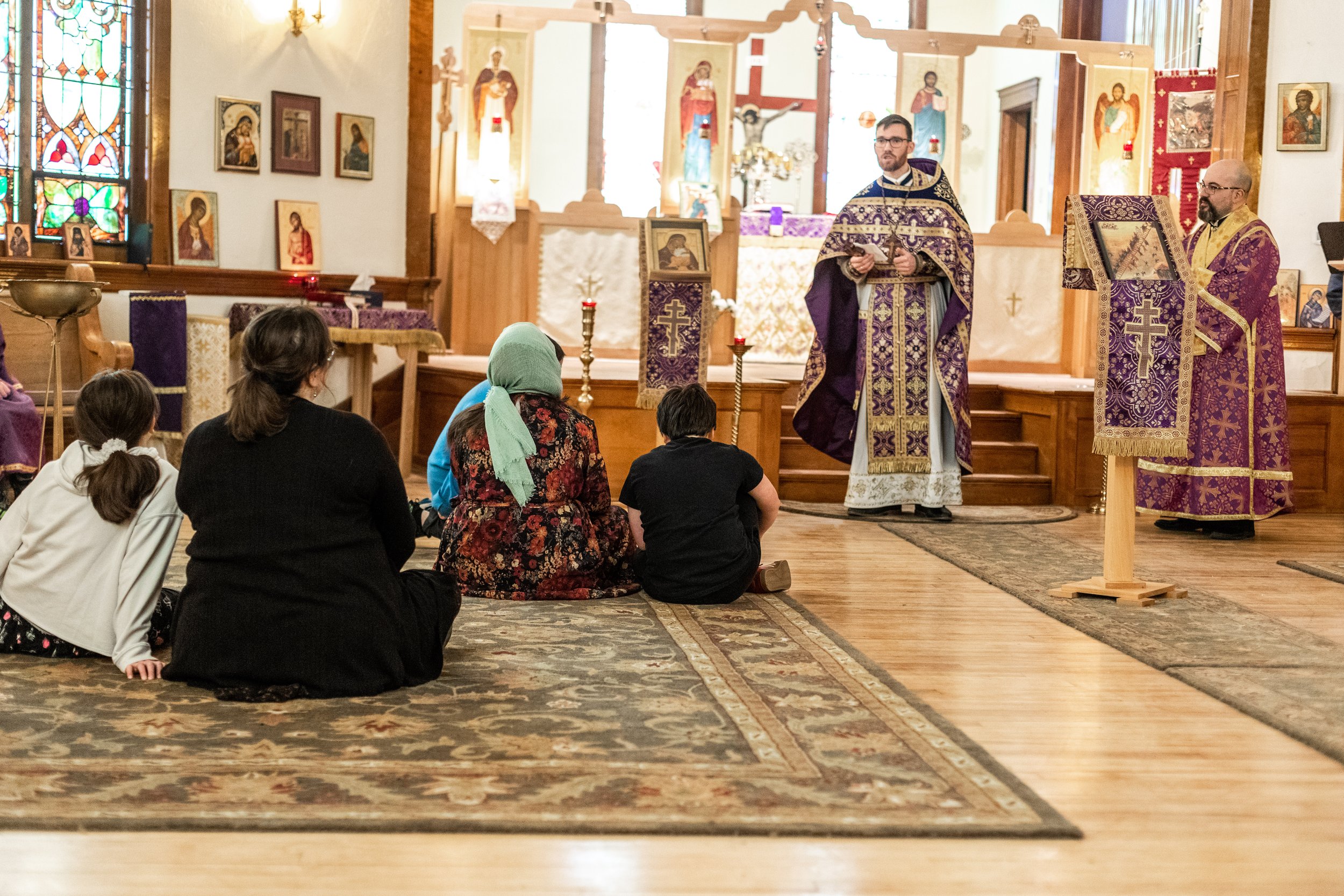
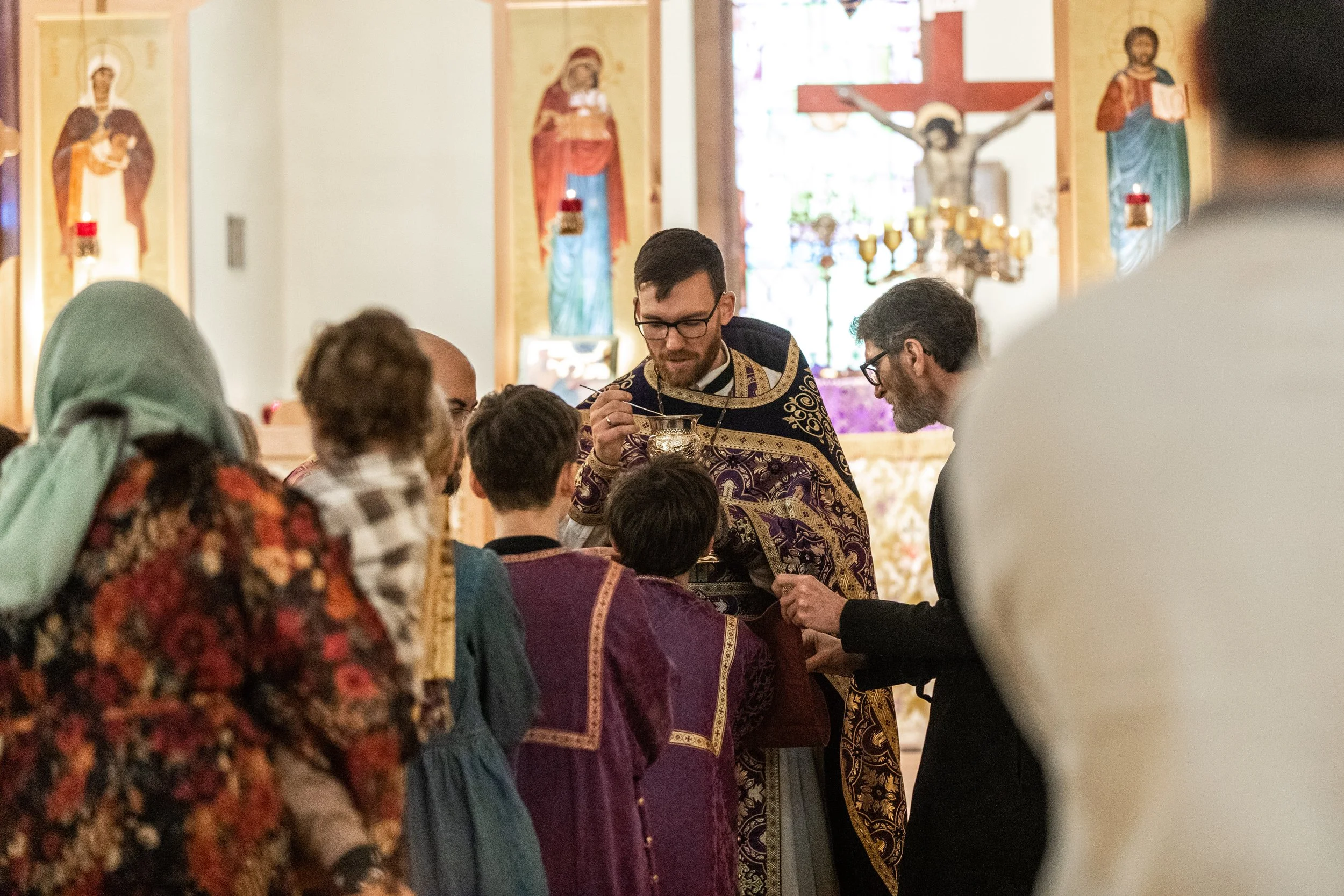
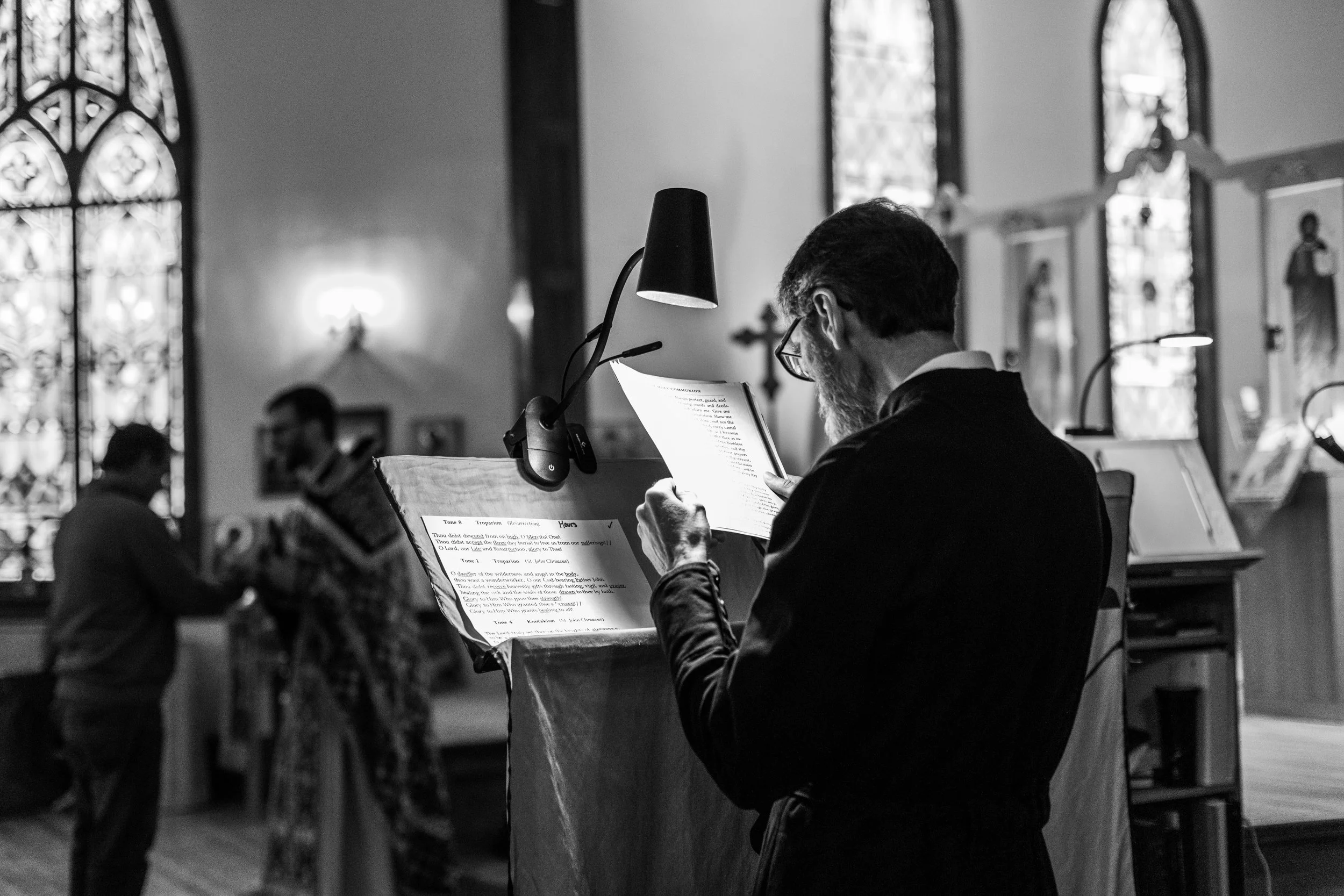
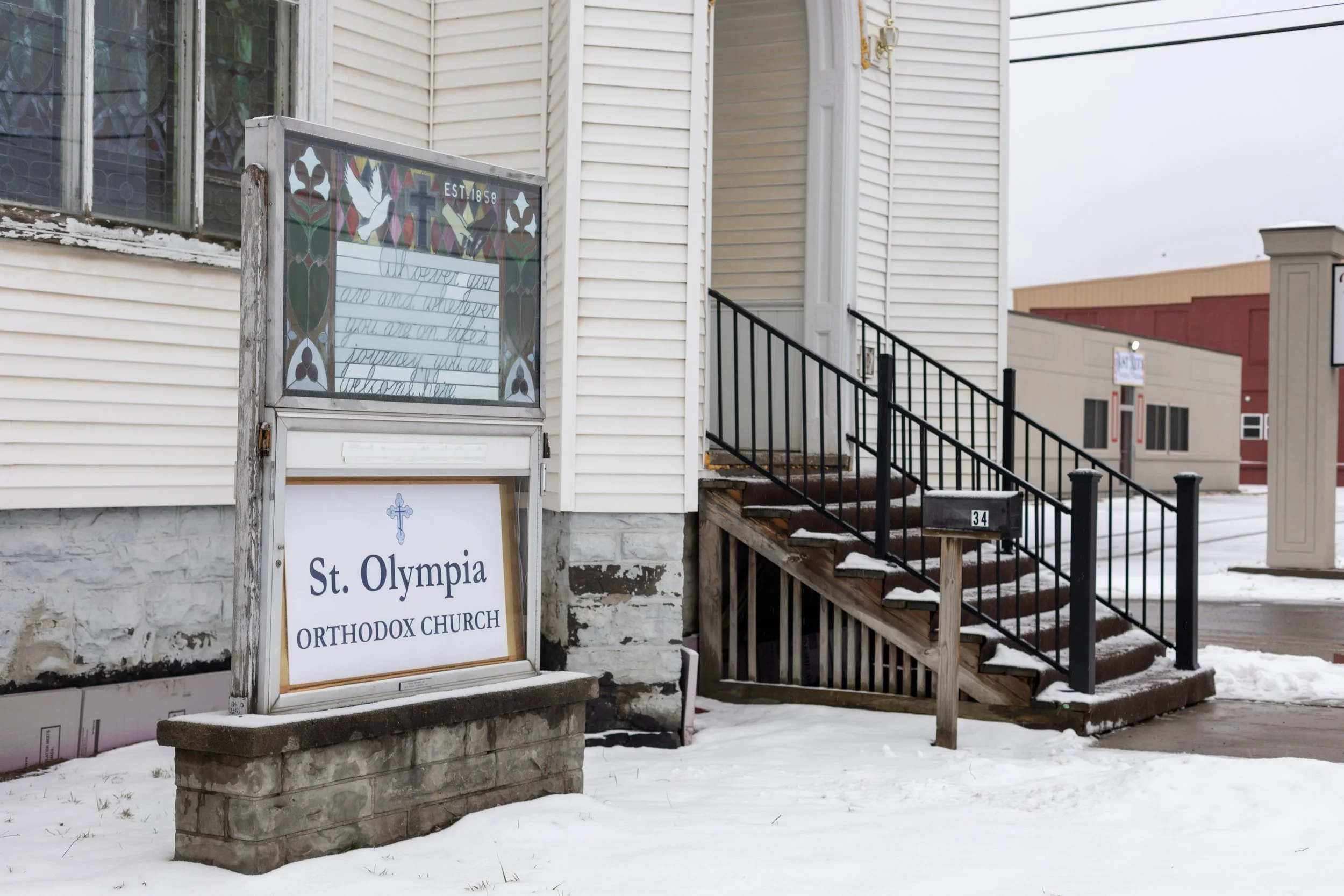
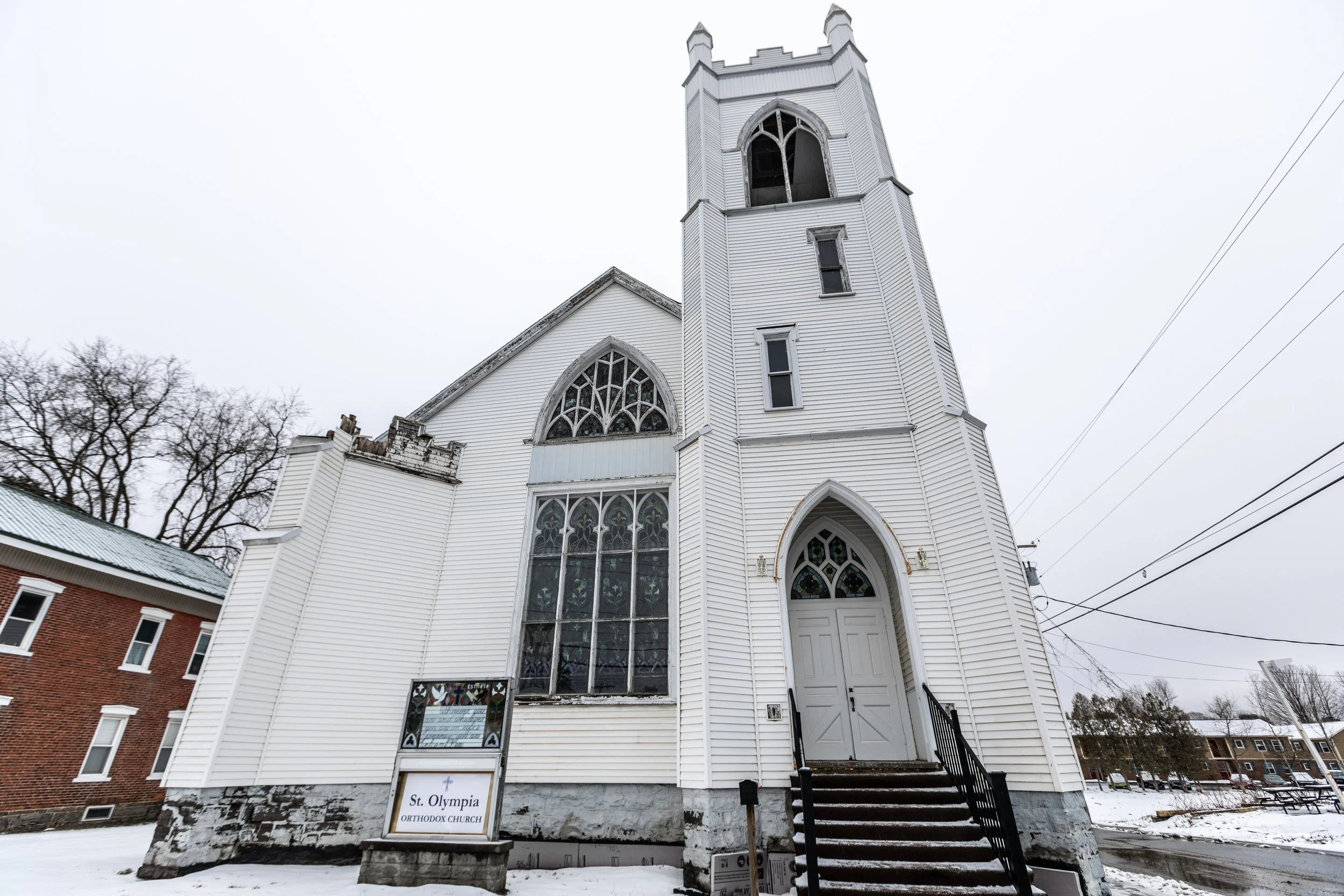
The following account is adapted from a presentation on the life
of Saint Olympia given to St. Olympia Mission in Potsdam, New York,
on April 1, 2015, by Dr. David C. Ford of St. Tikhon's Orthodox
Seminary.
c. 362
Born into the Imperial City
The little girl who would become the exceptionally beautiful,
highly astute, and deeply devout Saint Olympia the Deaconess was
born around the year 362 into a pagan family belonging to the
upper aristocracy of Constantinople. Her father, Seleucus, was a
count of the Empire, and her mother was named Alexandra.
Olympia's paternal grandfather was Ablabius, a Praetorian prefect,
consul, and senator during the reign of Saint Emperor Constantine
the Great. Through him came the vast fortune that would eventually
pass into Olympia's hands.
Her parents died while she was still young. She therefore came
under the guardianship of her uncle Procopius, a devout Christian,
and was educated by her Christian governess, Theodosia. Together
they raised Olympia in the love of Christ and nurtured within her
the intense devotion that would characterize the rest of her life.
Her Youth
Among the Great Fathers of the Church
Olympia's upbringing placed her remarkably close to some of the
greatest hierarchs and theologians of the fourth century.
Theodosia was the sister of Saint Amphilochius, Bishop of Iconium,
who was himself a close friend of Saint Basil the Great.
Olympia's uncle Procopius was also a close friend of Saint Gregory
the Theologian. When Gregory came to Constantinople in 379, he took
a particular interest in the young Olympia. Though she was only
about seventeen years old, she became a benefactor of the Church
of the Anastasia—the Resurrection—where Saint Gregory preached
the celebrated sermons against Arianism that helped earn him the
title The Theologian.
Olympia would later have an important relationship with
Saint Gregory of Nyssa as well. At her urging, Gregory undertook
his commentary on the Song of Songs. In its prologue he addressed
her with remarkable esteem.
I am persuaded that your soul's eye is pure from every passionate,
unclean thought, and that it looks without hindrance at God's grace
by means of these divine words of the Song.
— Saint Gregory of Nyssa,
Commentary on the Song of Songs
About Age 21
Marriage, Widowhood, and Consecration to Christ
At about twenty-one years of age Olympia married a nobleman of
high rank named Nebridius. Saint Gregory the Theologian was unable
to attend the wedding because of ill health, but sent her a letter
and a poem in which he described Olympia as
“a mirror of a Christian woman.”
The marriage lasted less than twenty months before Nebridius died.
Olympia was left a very young widow possessing an immense fortune,
including estates in Thrace, Galatia, Cappadocia, and Bithynia,
as well as numerous properties in Constantinople.
Her circumstances attracted the attention of Emperor Theodosius
the Great. The emperor assumed that a young aristocratic widow
should marry again and selected one of his own relatives,
Elpidius, as a prospective husband.
Olympia firmly refused.
Instead, she chose consecrated celibacy and resolved to devote
herself, her possessions, and the remainder of her life to Christ
and His Church.
A Courageous Refusal
Olympia and Emperor Theodosius
The emperor responded to Olympia's refusal by ordering her
extensive properties confiscated and held in trust until her
thirtieth birthday—or until she consented to the proposed marriage.
Olympia remained unmoved.
Rather than pleading merely for restoration of her personal
fortune, she replied that the emperor might do still better by
distributing it to the poor and to the churches.
You will do much better should you order it to be distributed
to the poor and the churches. I have been praying for quite a while
that I be set free from the embarrassment of vainglory which would
be mine if I distributed it to charity. Let me not be so seduced
by earthly things so as to lose the soul's true riches.
— Saint Olympia, as preserved by Palladius
Theodosius eventually restored control of her inheritance.
Olympia was then free to employ that extraordinary wealth in the
service of Christ.
A Steward of God's Gifts
Her Extraordinary Almsgiving
From that time forward, Olympia devoted both her wealth and her
energy to the Christian life. She cared for the sick and the poor,
supported churches and clergy, relieved those in distress, and
gave substantial aid to Christian work throughout Greece,
Asia Minor, and Syria.
Her generosity extended far beyond monetary gifts. She gave away
land and other property on such a scale that even Saint John
Chrysostom—the Church's great preacher of almsgiving—would later
counsel her to exercise discernment in her liberality.
For Olympia, her fortune was not truly her possession. It was a
trust committed to her by God for the benefit of His people.
The Ascetic Life
Founder of a Great Women's Monastery
Even before Saint John Chrysostom arrived from Antioch in 398 to
become Archbishop of Constantinople, Olympia had established a
monastery in a palace located on one of her properties immediately
adjoining the great cathedral of the imperial capital.
There she embraced an intense ascetic life together with several
relatives and approximately fifty of her former servants.
Over time the community grew dramatically, eventually encompassing
about two hundred and fifty women dedicated to the ascetic life.
Olympia herself practiced severe asceticism. She abandoned
aristocratic luxury, wore old and coarse clothing, and subjected
herself to rigorous restrictions in food, sleep, and bodily comfort.
Service at the Great Church
Ordained a Deaconess
After Olympia had passed the age of thirty, Archbishop Nectarius
of Constantinople ordained her to the order of deaconess.
Her ministry was not merely ceremonial. Olympia was highly
educated, deeply grounded in Holy Scripture, extensively involved
in charitable ministry, and trusted in matters affecting the life
of the Church.
Palladius records that the blessed Nectarius valued Olympia's
judgment so highly that he even sought her counsel concerning
ecclesiastical affairs.
A Holy Friendship
Saint Olympia and Saint John Chrysostom
When John Chrysostom became Archbishop of Constantinople, a
remarkable spiritual friendship quickly developed between the
two saints.
They shared an ardent love for Christ and His Church, devotion to
Holy Scripture, concern for the poor, and a profound appreciation
for the ascetic life. John was approximately fifteen years older
than Olympia and became for her a spiritual father and beloved
mentor. Olympia, in turn, became his trusted spiritual daughter,
helper, and confidante.
There was no one in Constantinople with whom he was to have a
deeper or more sympathetic understanding, no one with whom he was
to feel more at ease or to whom he was to pour out his heart more
unreservedly.
— J. N. D. Kelly,
Golden Mouth: The Story of John Chrysostom
Their relationship was both deeply spiritual and strikingly
practical. Olympia cared for the archbishop's physical needs and
would serve his meals, trying to ensure that he ate food suitable
for his weakened digestive system.
Chrysostom had damaged his health through extreme asceticism in
his youth. Olympia therefore tried to prevent him from weakening
himself further through excessive fasting.
Archbishop John deeply admired Olympia's consecration to Christ,
her refusal to remarry despite imperial pressure, and her complete
dedication of her fortune to the work of the Church.
Truly, Olympia the Deaconess and John the Golden-Mouthed were
kindred spirits.
403–407
The Exile of Saint John
The peace of their shared ministry did not last.
In 403 Saint John Chrysostom was illegally deposed at the infamous
Synod of the Oak. Although he was quickly recalled from his first
exile, his enemies continued their campaign against him.
In June of 404 he was driven from Constantinople once more.
This time he would never return alive.
From exile, John immediately began writing to Olympia—assuring her
concerning his own condition, asking about her health, and seeking
to strengthen her as persecution descended upon those who had
remained faithful to him.
The Letters to Olympia
Consolation in Despondency
One of Olympia's greatest trials was not material deprivation or
political persecution, but the profound grief she experienced
following the exile of her beloved spiritual father.
She struggled with despondency and deep sorrow as she tried to
comprehend the injustice inflicted upon Saint John and the turmoil
within the Church.
Consoling Olympia and strengthening her against despair became one
of the principal themes of the seventeen letters from Chrysostom
to Olympia that have survived.
Through those letters, Saint John repeatedly taught her that
outward circumstances cannot conquer the Christian who remains
faithful to God. He encouraged her to endure unjust suffering
courageously, resist despondency, and place her confidence in
divine providence.
Persecution
Falsely Accused and Put on Trial
Olympia herself soon became the target of persecution.
A devastating fire broke out when Saint John was seized from the
cathedral and led into exile. His supporters were accused of
responsibility for the destruction, and Olympia was twice brought
to trial on the charge of arson.
She defended herself forcefully and courageously.
I who have helped build so many churches am not in the habit of
burning them down.
— Saint Olympia's defense, as summarized in the historical record
405
Exile from Constantinople
Sometime in 405 Olympia departed Constantinople in what
Dr. Ford describes as a kind of semi-forced, self-imposed exile.
She settled in Nicomedia in western Asia Minor.
Separated from the monastery she had founded, from the Great
Church she had served, and from much of the world in which she had
poured out her life's work, Olympia nevertheless remained steadfast
in Christ.
September 14, 407
The Repose of Saint John Chrysostom
Saint John Chrysostom died while being forced by his guards to
march toward an even more remote place of exile in eastern
Asia Minor.
Whether Olympia ever received the news of his repose is unknown.
The surviving historical record does not tell us how she responded
if she did.
c. July 25, 408
Her Repose in the Lord
Saint Olympia most likely reposed in the Lord the following year,
around July 25, 408.
The exact chronology is not entirely certain, but July 25 became
the day on which the Holy Church commemorates her life and witness.
She had spent her life relinquishing precisely those things her
society regarded as sources of power: wealth, aristocratic status,
luxury, marriage alliances, and imperial favor.
In their place she chose Christ.
Her Enduring Witness
A Saint Remembered by the Ancient Church
Olympia's holiness and reputation were so considerable that an
anonymous Life of her was written not long after her repose.
Another account was composed centuries later by Sergia, an abbess
of the monastery Olympia had founded.
She also appears in important early Christian historical sources,
including the writings of Palladius and Sozomen.
Later accounts preserve traditions concerning miracles associated
with her holy relics and their translation to the monastery she
had established beside the Great Church of Constantinople.
Yet perhaps the clearest monument to Saint Olympia is the life
itself: a woman born into extraordinary privilege who freely
transformed that privilege into service; an aristocrat who chose
asceticism; a wealthy heiress who became a steward of the poor;
a widow who consecrated herself to Christ; a learned woman whose
judgment was valued by bishops; a deaconess who served the Church;
and a faithful spiritual daughter who remained steadfast beside
Saint John Chrysostom when political power turned against him.
☦
Through generosity, ascetic struggle, courageous fidelity, and
enduring love for Christ and His Holy Church, Saint Olympia
transformed the treasures entrusted to her on earth into treasure
in heaven.
Holy Mother Olympia, pray to GOD for us!
Source:
Adapted for parish presentation from a 2015 account of the life
of Saint Olympia by Dr. David C. Ford of St. Tikhon's Orthodox
Seminary, originally presented to St. Olympia Mission.